
Shopify Store Credit and Exchanges: How to Turn Returns into Repeat Sales (Scripts + Strategies, 2026)

Executive Summary
- A refund ends the sale. An exchange or store credit keeps the revenue and gives you a second chance with the customer.
- Many shoppers prefer an instant exchange when it’s easy. In the NRF and Happy Returns 2025 report, about three in four said they prefer return options that give an instant refund or exchange.
- The biggest levers are an exchange-first returns flow, a small bonus for choosing store credit, instant exchanges that ship before the return arrives, and support replies that offer an easy swap before a refund.
- Shopify lets you handle exchanges and store credit from the admin, and returns apps can automate it. Keep refunds simple to reach, so customers never feel trapped.
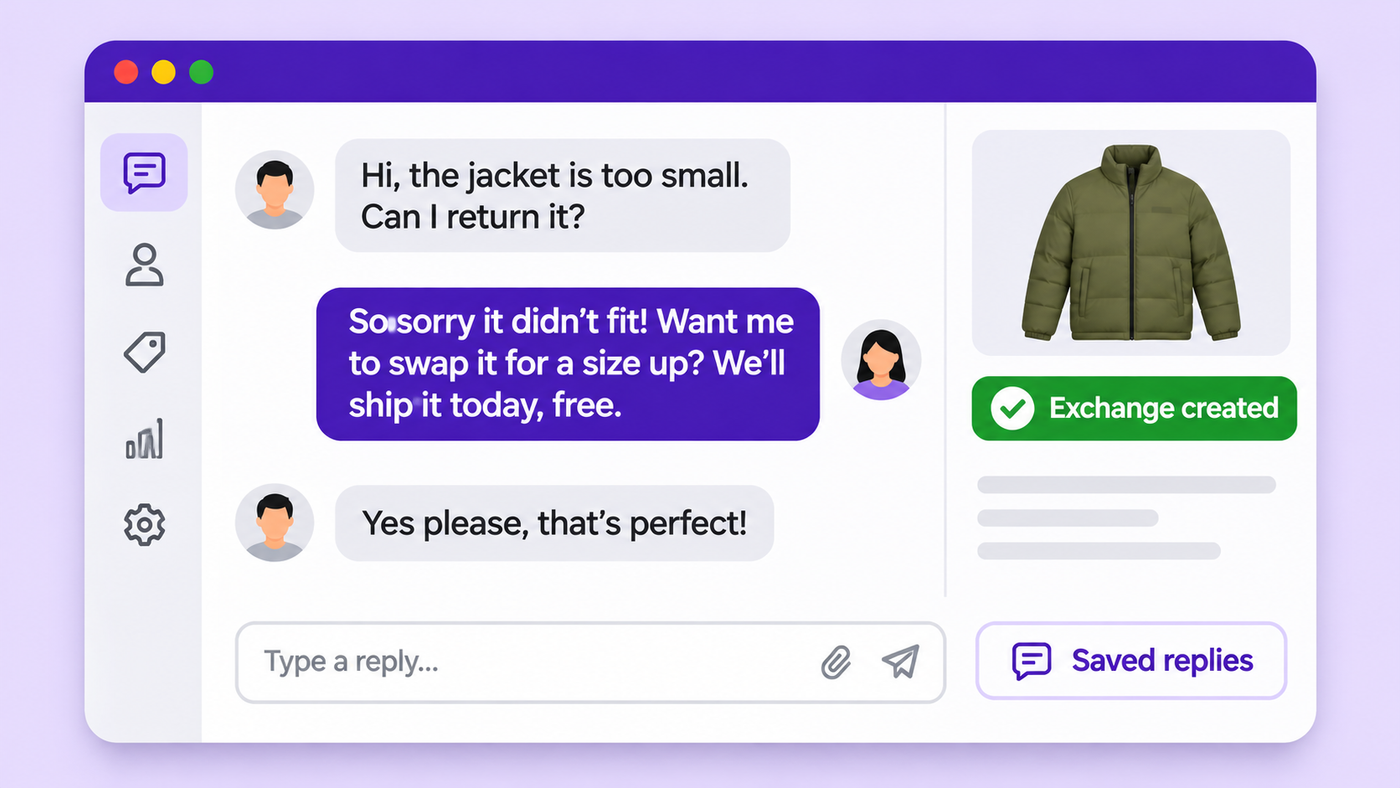
Picture this. A customer emails, “Hi, this is too small, I’d like to return it.” Someone on the team sends back a return label. Two weeks later, the refund goes through. Done.
Nobody did anything wrong there. But honestly? That’s a sale that didn’t need to disappear. The customer liked the thing enough to buy it. They just needed it in a medium instead of a small.
We see this in nearly every Shopify store we look at, and it’s one of the easiest wins out there. Getting more returns to end as exchanges or store credit protects a surprising amount of revenue, especially after Black Friday and the holidays, when returns come in waves. And you don’t need to be pushy to do it. Mostly, you just need to make the good option the easy one.
Refund vs Exchange vs Store Credit: Why It Matters
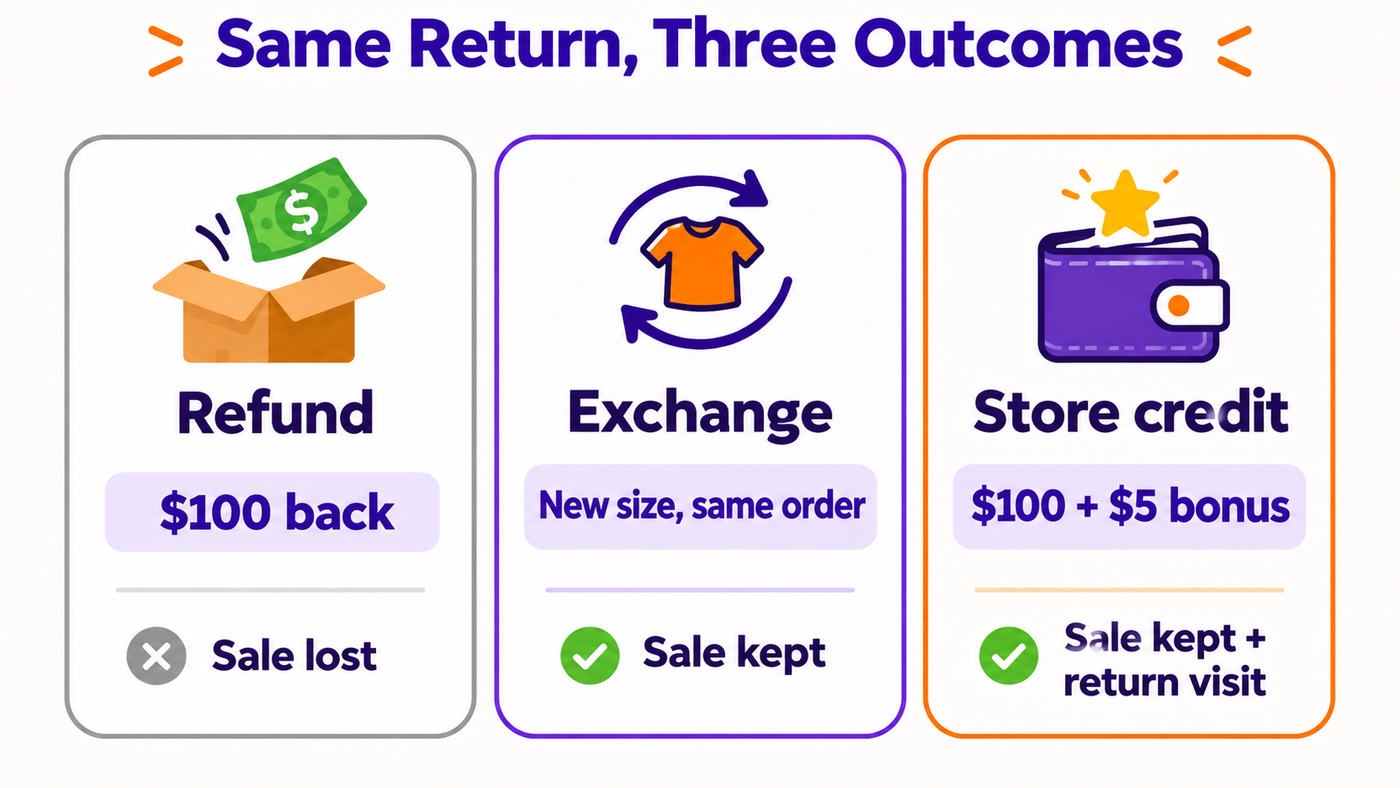
Let’s keep this simple. With a refund, the money goes back and the sale’s gone. Usually you’ve also paid shipping both ways, so you’re actually down.
With an exchange, the customer swaps for something that works, like another size or color. The order stays an order, and they end up happy with what they’ve got.
With store credit, they get the value back as a balance to spend with you later. The money stays in your business, and they’ve got a reason to come back.
For the customer, any of these can feel perfectly fine, as long as it’s quick and fair. For you, though, the gap is massive. Two of them keep the revenue. One doesn’t.
What Is Store Credit?
Store credit is basically money in your store’s wallet, waiting for the customer to spend it. On Shopify it sits on the customer’s account and gets applied when they check out. Think of it like a gift card that belongs to one specific person, rather than a code anyone could use.
Quick note, because people mix this up constantly: it has nothing to do with a store credit card. That’s a financing thing from a bank. Totally different animal.
Why Shoppers Are Open to Exchanges
Nobody returns stuff for fun. People send things back because something didn’t work out. It didn’t fit, the color looked off, it wasn’t what they had in mind. Sort that problem out quickly and most folks are more than happy to swap.
The NRF and Happy Returns 2025 Retail Returns Landscape report found that around three in four shoppers would rather go with a return option that gets them an instant refund or exchange. That word “instant” is doing a lot of work. No one wants to post something back and then wait three weeks for the replacement. Make the swap quick and painless, and plenty more people will happily take it.
7 Strategies to Turn Returns into Exchanges
1. Put Exchanges First in Your Returns Flow
When someone starts a return, the first thing they should see is “swap for a different size or color,” with the product photos right there. The refund option stays, it just comes second. You’d be surprised how much this one tweak moves things.
2. Offer Instant Exchanges
This is the big one. With instant exchanges, the new item ships as soon as the customer drops off their return, sometimes even before. Loop, Redo and AfterShip Returns can all do this. It wipes out the main reason people pick a refund in the first place, which is the waiting.
3. Add a Small Bonus for Store Credit
You don’t need much. An extra $5, or 10% on top, for picking store credit over a refund. It still costs you less than the refund would, and it gives the customer a nice little reason to say yes.
4. Make Exchange Shipping Free, Even If Refunds Aren’t
If you charge for return labels, drop the fee for exchanges and store credit. “Free exchange, or refund minus $7.95 for the label” makes the decision pretty easy, and nobody’s being forced into anything. We dig into fee options in our post on restocking fees vs free returns.
5. Let Customers Exchange for Something Different
An exchange doesn’t have to be the same product in another size. Let people pick anything of a similar price, or pay the difference if they fancy something pricier. That way you keep the sale even when the original item just wasn’t for them.
6. Fix the Reasons People Return in the First Place
Of course, the cheapest exchange is one that never happens. If the same jacket keeps coming back as “too small,” your size chart’s probably off. If people keep saying the color looks different, look at your photos. Our guide to the hidden cost of ecommerce returns shows how to track return reasons properly.
7. Train Your Support Team to Offer Exchanges First
Loads of returns start as an email, a chat or a WhatsApp message, long before anyone opens a returns portal. If the first reply offers a friendly, easy swap, a lot of customers just go with it. That’s where the scripts below come in.
Support Scripts to Turn Refund Requests into Exchanges
We’ve tried to keep these sounding like a helpful person, not a sales pitch. The refund is always on the table. Tweak them so they sound like your brand.
Script 1: Wrong size
Hi {first name}, so sorry it didn’t fit! The easiest fix is a quick swap to a {size up/size down}, and we can ship it out as soon as your return is on its way, at no extra cost. Want me to set that up for you? If you’d rather have a refund, that’s absolutely fine too, just let me know.
Script 2: Didn’t like the color or style
Hi {first name}, thanks for letting us know. If you’d like to try a different color or style instead, I can set up a free exchange for anything of the same price, or you can swap for something else and just pay the difference. Happy to send a few suggestions if that helps! And if you’d prefer your money back, I can do that too.
Script 3: Offering store credit with a bonus
Hi {first name}, I’ve got your return request. You can choose a refund to your original payment method, or store credit with an extra $5 on top, which you can use anytime. Just reply with whichever works best for you.
Script 4: Gift return
Hi {first name}, hope you had a lovely holiday! Since this was a gift, we can send you store credit for the full value, so you can pick something you’ll really love. I’ve attached a few of this week’s favorites in case you want some ideas.
Script 5: Item arrived damaged
Hi {first name}, I’m really sorry it arrived like that. That’s not okay. I can send a replacement right away, and you don’t need to send the damaged one back. Or if you’d prefer a refund, I’ll process that today. Which would you like?
Script 6: Customer insists on a refund
No problem at all, {first name}. I’ve started your refund, and you’ll get a confirmation email shortly. Thanks for giving us a try, and if you ever want to give us another shot, we’d love to have you back.
That last one’s important. Once someone’s said they want their money back, give it to them, and be nice about it. Pushing a second time is exactly how a one-off returner turns into someone who never orders again. You can save all of these as macros in your helpdesk, and our post on customer service macros walks through setting them up.
How to Do an Exchange and Give Store Credit on Shopify
Shopify can handle both out of the box, and returns apps take it further. Shopify tweaks its admin fairly often, so think of this as the general idea rather than click-by-click steps.
For exchanges, when you process a return in the admin you can add the exchange item right there, so the customer gets the new size or product instead of their money back. If the new one’s pricier, they pay the difference. If it’s cheaper, you can refund or credit what’s left.
For store credit, you can issue it straight to a customer’s account, and depending on how your store’s set up, you can refund a return as store credit rather than to the original card. The customer then sees their balance and uses it at checkout. It works best with Shopify’s customer accounts switched on, so people can log in and actually see what they’ve got.
And if returns are a big part of your week, a returns app is worth it. Loop, Redo and AfterShip Returns let customers pick exchanges or store credit on their own, add bonus credit automatically and send out instant exchanges, all without your team lifting a finger.
Store Credit vs Refund: Is It Fair to Customers?
It’s fair as long as it’s a genuine choice. If your policy says refunds are available within 30 days, customers should be able to get one, no hoops. And that policy should be easy to find before anyone buys. Store credit should feel like a nice extra, not a trap.
A couple of things go a long way here. Give store credit a long expiry, or better, no expiry at all, so it doesn’t feel like it’s going to vanish on them. And email people their balance and how to use it straight after you issue it. Rules around store credit and refunds can differ by state and country, so it’s worth double-checking what applies to you.
Return and Exchange Policy Example
Here’s a short section you can adapt for your returns page:
Returns and exchanges
Not quite right? You have 30 days from delivery to return or exchange.
- Exchanges are free. Swap for a different size, color or any item of the same price. We’ll ship your new item as soon as your return is on its way.
- Store credit: Choose store credit and get an extra $5 to spend. Your credit never expires.
- Refunds go back to your original payment method once we receive your return.
- Items should be unworn, with tags attached. Final sale items can’t be returned.
Questions? Message us anytime and we’ll sort it out.
If you’re thinking about holiday orders too, our guide to holiday return policies on Shopify covers longer windows for gifts.

Track What’s Working
Once a month, have a quick look at how your returns are ending up. How many turned into exchanges, how many into store credit, and how many into refunds? How much of the store credit actually gets spent, and how fast? And do the people who got credit come back and spend more than they had? If exchanges are going up and complaints aren’t, you’re doing it right.
Frequently Asked Questions
What does store credit mean?
It’s a balance a customer can spend in your store instead of getting their money back. On Shopify, it lives on their account and gets used at checkout.
How do I give store credit on Shopify?
You can issue it to a customer from the Shopify admin, and depending on your setup, refund a return as store credit. Apps like Loop, Redo and AfterShip Returns can do it automatically too.
How do I do an exchange on Shopify?
When you’re processing a return in the admin, add the exchange item to it. The customer gets the new item, and any price difference gets charged or credited.
Is store credit the same as a gift card?
Close, but not quite. Store credit is tied to one customer’s account, while a gift card is a code anyone can use. And neither is the same as a store credit card, which is a financing product.
Is it better to offer store credit or a refund?
For your business, store credit or an exchange keeps the money. For your customers, it should always be a choice. Offer credit with a small bonus, and keep refunds available within your policy.
How do I encourage exchanges over refunds on Shopify?
Show exchanges first when someone starts a return, offer instant exchanges, make exchange shipping free, add a little bonus for store credit, and get your support team to offer an easy swap in their very first reply.
Keep the Sale, Keep the Customer
Most returns aren’t really “I’m done with you.” They’re “this one didn’t work out.” Make swapping easy, give people a little nudge toward credit, and get your team offering the simple fix first. You’ll hang on to more revenue and more customers, and nobody ever has to feel stuck.
Want help setting up an exchange-first returns flow, store credit rules or support scripts for your team? Have a look at our ecommerce returns and refunds management and macros, tags and workflows services, start with a 15-day free pilot, or just message us on WhatsApp.
Recommended for you

Live Chat for Ecommerce: Setup, Staffing and Metrics for Shopify Stores (2026)

Ecommerce Return Solutions: 7 Ways to Cut Return Costs in 2026

Agentic Commerce Optimization for Shopify: How to Get Your Products Chosen by AI Shopping Agents (2026)